 Add to Chrome
 Add to Firefox
 Add to Edge
From Knowing to Doing: A Memory-Controlled Benchmark for LLM Trading Agents on Stock Markets
May 27, 2026
Evaluating whether large language model (LLM) agents can profit in capital markets is increasingly framed as end-to-end trading: place an agent in a historical market, let it trade, and measure portfolio returns. This setup is vulnerable to two evaluation failures. First, long backtests often overlap with the knowledge cutoffs of frontier LLMs, allowing memorized tickers, dates, prices, and market narratives to substitute for investment reasoning. Second, raw returns are a noisy proxy for stock-selection ability, since positive performance may come from market beta, style exposure, or favorable regimes rather than genuine alpha. We introduce KTD-Fin (Knowing-To-Doing Financial Benchmark), an end-to-end stock-market trading benchmark that addresses both issues. KTD-Fin uses a data-side masking protocol to anonymize key identifiers and calendar information consistently across prompts and tools, separating historical market memory from investment decision-making. It also incorporates a Barra-style performance attribution framework that decomposes portfolio returns into market, style, and stock-selection alpha components. Across ten frontier LLM agents evaluated on the Chinese CSI300 over a 2024--2026 window, masking substantially changes agent rationales, pushing them towards anonymized factor-based reasoning. Attribution analysis further shows that LLM agents' cumulative returns under leakage-controlled evaluation are largely explained by passive market and style exposure, with limited evidence of persistent stock-selection alpha. These findings suggest that financial LLM benchmarks should evaluate not only whether an agent makes money, but also whether the source of returns reflects transferable investment skill. We release KTD-Fin as a reproducible template for leakage-controlled and attribution-aware evaluation of LLM trading agents.

Bridging SFT and RL: Dynamic Policy Optimization for Robust Reasoning
Apr 10, 2026Post-training paradigms for Large Language Models (LLMs), primarily Supervised Fine-Tuning (SFT) and Reinforcement Learning (RL), face a fundamental dilemma: SFT provides stability (low variance) but suffers from high fitting bias, while RL enables exploration (low bias) but grapples with high gradient variance. Existing unified optimization strategies often employ naive loss weighting, overlooking the statistical conflict between these distinct gradient signals. In this paper, we provide a rigorous theoretical analysis of this bias-variance trade-off and propose \textbf{DYPO} (Dynamic Policy Optimization), a unified framework designed to structurally mitigate this conflict. DYPO integrates three core components: (1) a \textit{Group Alignment Loss (GAL)} that leverages intrinsic group dynamics to significantly reduce RL gradient variance; (2) a \textit{Multi-Teacher Distillation} mechanism that corrects SFT fitting bias via diverse reasoning paths; and (3) a \textit{Dynamic Exploitation-Exploration Gating} mechanism that adaptively arbitrates between stable SFT and exploratory RL based on reward feedback. Theoretical analysis confirms that DYPO linearly reduces fitting bias and minimizes overall variance. Extensive experiments demonstrate that DYPO significantly outperforms traditional sequential pipelines, achieving an average improvement of 4.8\% on complex reasoning benchmarks and 13.3\% on out-of-distribution tasks. Our code is publicly available at https://github.com/Tocci-Zhu/DYPO.
GloPath: An Entity-Centric Foundation Model for Glomerular Lesion Assessment and Clinicopathological Insights
Mar 03, 2026Glomerular pathology is central to the diagnosis and prognosis of renal diseases, yet the heterogeneity of glomerular morphology and fine-grained lesion patterns remain challenging for current AI approaches. We present GloPath, an entity-centric foundation model trained on over one million glomeruli extracted from 14,049 renal biopsy specimens using multi-scale and multi-view self-supervised learning. GloPath addresses two major challenges in nephropathology: glomerular lesion assessment and clinicopathological insights discovery. For lesion assessment, GloPath was benchmarked across three independent cohorts on 52 tasks, including lesion recognition, grading, few-shot classification, and cross-modality diagnosis-outperforming state-of-the-art methods in 42 tasks (80.8%). In the large-scale real-world study, it achieved an ROC-AUC of 91.51% for lesion recognition, demonstrating strong robustness in routine clinical settings. For clinicopathological insights, GloPath systematically revealed statistically significant associations between glomerular morphological parameters and clinical indicators across 224 morphology-clinical variable pairs, demonstrating its capacity to connect tissue-level pathology with patient-level outcomes. Together, these results position GloPath as a scalable and interpretable platform for glomerular lesion assessment and clinicopathological discovery, representing a step toward clinically translatable AI in renal pathology.
To What Extent Do Token-Level Representations from Pathology Foundation Models Improve Dense Prediction?
Feb 03, 2026Pathology foundation models (PFMs) have rapidly advanced and are becoming a common backbone for downstream clinical tasks, offering strong transferability across tissues and institutions. However, for dense prediction (e.g., segmentation), practical deployment still lacks a clear, reproducible understanding of how different PFMs behave across datasets and how adaptation choices affect performance and stability. We present PFM-DenseBench, a large-scale benchmark for dense pathology prediction, evaluating 17 PFMs across 18 public segmentation datasets. Under a unified protocol, we systematically assess PFMs with multiple adaptation and fine-tuning strategies, and derive insightful, practice-oriented findings on when and why different PFMs and tuning choices succeed or fail across heterogeneous datasets. We release containers, configs, and dataset cards to enable reproducible evaluation and informed PFM selection for real-world dense pathology tasks. Project Website: https://m4a1tastegood.github.io/PFM-DenseBench
HookMIL: Revisiting Context Modeling in Multiple Instance Learning for Computational Pathology
Dec 20, 2025Multiple Instance Learning (MIL) has enabled weakly supervised analysis of whole-slide images (WSIs) in computational pathology. However, traditional MIL approaches often lose crucial contextual information, while transformer-based variants, though more expressive, suffer from quadratic complexity and redundant computations. To address these limitations, we propose HookMIL, a context-aware and computationally efficient MIL framework that leverages compact, learnable hook tokens for structured contextual aggregation. These tokens can be initialized from (i) key-patch visual features, (ii) text embeddings from vision-language pathology models, and (iii) spatially grounded features from spatial transcriptomics-vision models. This multimodal initialization enables Hook Tokens to incorporate rich textual and spatial priors, accelerating convergence and enhancing representation quality. During training, Hook tokens interact with instances through bidirectional attention with linear complexity. To further promote specialization, we introduce a Hook Diversity Loss that encourages each token to focus on distinct histopathological patterns. Additionally, a hook-to-hook communication mechanism refines contextual interactions while minimizing redundancy. Extensive experiments on four public pathology datasets demonstrate that HookMIL achieves state-of-the-art performance, with improved computational efficiency and interpretability. Codes are available at https://github.com/lingxitong/HookMIL.
StainNet: A Special Staining Self-Supervised Vision Transformer for Computational Pathology
Dec 11, 2025Foundation models trained with self-supervised learning (SSL) on large-scale histological images have significantly accelerated the development of computational pathology. These models can serve as backbones for region-of-interest (ROI) image analysis or patch-level feature extractors in whole-slide images (WSIs) based on multiple instance learning (MIL). Existing pathology foundation models (PFMs) are typically pre-trained on Hematoxylin-Eosin (H&E) stained pathology images. However, images with special stains, such as immunohistochemistry, are also frequently used in clinical practice. PFMs pre-trained mainly on H\&E-stained images may be limited in clinical applications involving special stains. To address this issue, we propose StainNet, a specialized foundation model for special stains based on the vision transformer (ViT) architecture. StainNet adopts a self-distillation SSL approach and is trained on over 1.4 million patch images cropping from 20,231 publicly available special staining WSIs in the HISTAI database. To evaluate StainNet, we conduct experiments on an in-house slide-level liver malignancy classification task and two public ROI-level datasets to demonstrate its strong ability. We also perform few-ratio learning and retrieval evaluations, and compare StainNet with recently larger PFMs to further highlight its strengths. We have released the StainNet model weights at: https://huggingface.co/JWonderLand/StainNet.
Multimodal Prototype Alignment for Semi-supervised Pathology Image Segmentation
Aug 27, 2025Pathological image segmentation faces numerous challenges, particularly due to ambiguous semantic boundaries and the high cost of pixel-level annotations. Although recent semi-supervised methods based on consistency regularization (e.g., UniMatch) have made notable progress, they mainly rely on perturbation-based consistency within the image modality, making it difficult to capture high-level semantic priors, especially in structurally complex pathology images. To address these limitations, we propose MPAMatch - a novel segmentation framework that performs pixel-level contrastive learning under a multimodal prototype-guided supervision paradigm. The core innovation of MPAMatch lies in the dual contrastive learning scheme between image prototypes and pixel labels, and between text prototypes and pixel labels, providing supervision at both structural and semantic levels. This coarse-to-fine supervisory strategy not only enhances the discriminative capability on unlabeled samples but also introduces the text prototype supervision into segmentation for the first time, significantly improving semantic boundary modeling. In addition, we reconstruct the classic segmentation architecture (TransUNet) by replacing its ViT backbone with a pathology-pretrained foundation model (Uni), enabling more effective extraction of pathology-relevant features. Extensive experiments on GLAS, EBHI-SEG-GLAND, EBHI-SEG-CANCER, and KPI show MPAMatch's superiority over state-of-the-art methods, validating its dual advantages in structural and semantic modeling.
Deformable Attention Graph Representation Learning for Histopathology Whole Slide Image Analysis
Aug 07, 2025Accurate classification of Whole Slide Images (WSIs) and Regions of Interest (ROIs) is a fundamental challenge in computational pathology. While mainstream approaches often adopt Multiple Instance Learning (MIL), they struggle to capture the spatial dependencies among tissue structures. Graph Neural Networks (GNNs) have emerged as a solution to model inter-instance relationships, yet most rely on static graph topologies and overlook the physical spatial positions of tissue patches. Moreover, conventional attention mechanisms lack specificity, limiting their ability to focus on structurally relevant regions. In this work, we propose a novel GNN framework with deformable attention for pathology image analysis. We construct a dynamic weighted directed graph based on patch features, where each node aggregates contextual information from its neighbors via attention-weighted edges. Specifically, we incorporate learnable spatial offsets informed by the real coordinates of each patch, enabling the model to adaptively attend to morphologically relevant regions across the slide. This design significantly enhances the contextual field while preserving spatial specificity. Our framework achieves state-of-the-art performance on four benchmark datasets (TCGA-COAD, BRACS, gastric intestinal metaplasia grading, and intestinal ROI classification), demonstrating the power of deformable attention in capturing complex spatial structures in WSIs and ROIs.
A Simple Linear Patch Revives Layer-Pruned Large Language Models
May 30, 2025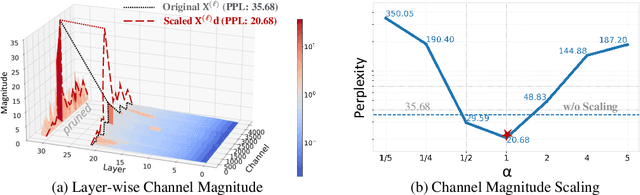
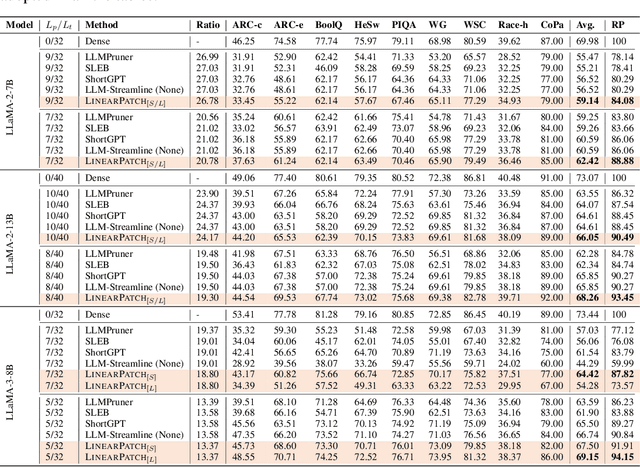
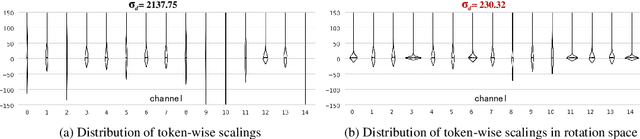
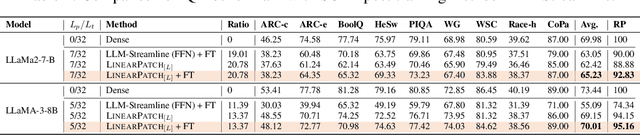
Layer pruning has become a popular technique for compressing large language models (LLMs) due to its simplicity. However, existing layer pruning methods often suffer from significant performance drops. We identify that this degradation stems from the mismatch of activation magnitudes across layers and tokens at the pruning interface. To address this, we propose LinearPatch, a simple plug-and-play technique to revive the layer-pruned LLMs. The proposed method adopts Hadamard transformation to suppress massive outliers in particular tokens, and channel-wise scaling to align the activation magnitudes. These operations can be fused into a single matrix, which functions as a patch to bridge the pruning interface with negligible inference overhead. LinearPatch retains up to 94.15% performance of the original model when pruning 5 layers of LLaMA-3-8B on the question answering benchmark, surpassing existing state-of-the-art methods by 4%. In addition, the patch matrix can be further optimized with memory efficient offline knowledge distillation. With only 5K samples, the retained performance of LinearPatch can be further boosted to 95.16% within 30 minutes on a single computing card.
Subspecialty-Specific Foundation Model for Intelligent Gastrointestinal Pathology
May 28, 2025Gastrointestinal (GI) diseases represent a clinically significant burden, necessitating precise diagnostic approaches to optimize patient outcomes. Conventional histopathological diagnosis, heavily reliant on the subjective interpretation of pathologists, suffers from limited reproducibility and diagnostic variability. To overcome these limitations and address the lack of pathology-specific foundation models for GI diseases, we develop Digepath, a specialized foundation model for GI pathology. Our framework introduces a dual-phase iterative optimization strategy combining pretraining with fine-screening, specifically designed to address the detection of sparsely distributed lesion areas in whole-slide images. Digepath is pretrained on more than 353 million image patches from over 200,000 hematoxylin and eosin-stained slides of GI diseases. It attains state-of-the-art performance on 33 out of 34 tasks related to GI pathology, including pathological diagnosis, molecular prediction, gene mutation prediction, and prognosis evaluation, particularly in diagnostically ambiguous cases and resolution-agnostic tissue classification.We further translate the intelligent screening module for early GI cancer and achieve near-perfect 99.6% sensitivity across 9 independent medical institutions nationwide. The outstanding performance of Digepath highlights its potential to bridge critical gaps in histopathological practice. This work not only advances AI-driven precision pathology for GI diseases but also establishes a transferable paradigm for other pathology subspecialties.